

Revision Knee Replacement in Seattle, WA
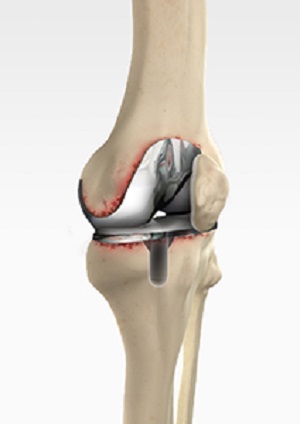
A previous knee replacement can sometimes become painful, unstable, loose, infected, or damaged over time. When a knee implant fails or no longer provides the expected function, revision knee replacement in Seattle, WA may be necessary to address the underlying problem and restore knee stability and mobility. Dr. Thomas Fraychineaud, MD, is a fellowship-trained orthopedic surgeon specializing in adult reconstruction, hip and knee replacement, and revision joint replacement. He provides individualized evaluation and treatment planning for patients with failed or complicated knee replacements, with care tailored to the condition of the implant, surrounding bone and soft tissues, and each patient's goals.
What is Revision Knee Replacement?
Revision knee replacement surgery involves replacing a part or all your previous knee prosthesis with a new prosthesis. Although total knee replacement surgery is successful, sometimes the procedure can fail due to various reasons and may require a second revision surgery.
What is Arthritis?
The knee joints are lined by soft articular cartilage that cushion the joints and aid in smooth movement of the joint bones. Degeneration of the cartilage due to wear and tear leads to arthritis, which is characterized by severe pain.
What is Total Knee Replacement?
During total knee replacement, the damaged cartilage and bone is removed from the knee joint and replaced with artificial components. Artificial knee joints are usually made of metal, ceramic or plastic, and consist of the femoral and the tibial components.
What are the Indications for Revision Knee Replacement?
Revision knee replacement surgery may be advised if you have one or more of the following conditions:
- Trauma to the knee joint
- Chronic progressive joint disease
- Increased pain in the affected knee
- Worn out prosthesis
- Knee instability or a feeling of giving way while walking
- Loosening of the prosthesis
- Infection in the prosthetic joint
- Weakening of bone around the knee replacement - a process known as osteolysis (bone loss)
- Stiffness in the knee
- Fracture
What is the Procedure for Revision Knee Replacement?
Revision knee replacement surgery may involve the replacement of one or all the components.
The surgery is performed under general anesthesia. Your surgeon makes an incision over your knee to expose the knee joint. The kneecap along with its ligament may be moved aside so that there is enough room to perform the operation. Then, the old femoral component of the knee prosthesis is removed. The femur is prepared to receive the new component. In some cases, the damaged bone is removed and bone graft or a metal wedge may be used to make up for the lost bone.
Next, the tibial component along with the old plastic liner is removed. The damaged bone is cut and the tibia is prepared to receive the new component. Like the femur, the lost bone is replaced either by a metal wedge or bone graft. Then, a new tibial component is secured to the end of the bone using bone cement. A new plastic liner will be placed on top of the tibial component. If the patella (kneecap) has been damaged, your surgeon will resurface and attach a plastic component. The tibial and femoral components of the prosthesis are then brought together to form the new knee joint, and the knee muscles and tendons are reattached. Surgical drains are placed for the excess blood to drain out and the incision is closed.
What are the Risks and Complications of Revision Knee Replacement?
Like all major surgical procedures, there may be certain risks and complications involved with revision knee replacement surgery. The possible complications after revision knee replacement include:
- Stiffness in the knee
- Infection
- Bleeding
- Formation of blood clots in the leg veins
- Injury to nerves or blood vessels
- Prosthesis failure
- Patella (kneecap) dislocation
- Ligament injuries
What Does Postoperative Care for Revision Knee Replacement Involve?
Following revision knee replacement surgery, a continuous passive motion (CPM) machine may be used to allow your knee joint to slowly move. The machine, attached to the treated leg, slowly moves the joint through a controlled range of motion, while you are at rest.
You can walk with crutches or a walker. You will be sent for rehabilitation within a couple of days of surgery. A physical therapist will teach you specific exercises to strengthen your leg and restore range of motion to the knee. Your physical therapist will also provide you with a home exercise program to strengthen the thigh and calf muscles.
Knee immobilizers are used when performing physical therapy, walking and while sleeping to keep the knee stabilized.
Why Choose Dr. Fraychineaud for Revision Knee Replacement in Seattle, WA?
Revision knee replacement can be more complex than a primary knee replacement because the surgeon may need to remove existing components, address bone loss, manage instability, treat infection, or reconstruct damaged tissues. Dr. Thomas Fraychineaud completed his orthopedic surgery residency at George Washington University and pursued fellowship training in adult reconstruction at the University of Minnesota. His advanced training focuses on hip and knee replacement and complex joint reconstruction.
Dr. Fraychineaud also specializes in revision joint replacement, making complex reconstructive care an important part of his orthopedic practice. His academic background includes research involving joint replacement outcomes and orthopedic reconstruction. For patients in Seattle and surrounding communities, his adult reconstruction training provides a specialized foundation for evaluating failed knee replacements and developing an individualized treatment plan.
Patients choose Dr. Fraychineaud for:
- Fellowship training in Adult Reconstruction and Joint Replacement
- Specialized expertise in knee replacement and revision joint replacement
- Experience with complex knee reconstruction
- Evaluation and treatment of painful or failed knee replacements
- Individualized treatment planning based on the cause of implant failure
- Evidence-based orthopedic care informed by clinical research
- A comprehensive approach focused on restoring knee stability, mobility, and function
Revision Knee Replacement FAQs
What is revision knee replacement?
Revision knee replacement is a surgical procedure performed to replace, revise, or repair some or all of the components of a previous knee replacement. The procedure may be necessary when an artificial knee becomes painful, unstable, loose, infected, damaged, or otherwise fails to function properly. The extent of revision depends on the cause of the problem and the condition of the existing implant and surrounding tissues.
Why might I need revision knee replacement?
Revision surgery may be recommended for several reasons, including implant loosening or wear, infection, instability, stiffness, fracture around the implant, recurrent pain, or bone loss around the prosthesis. In some cases, arthritis or damage in the remaining joint structures can also contribute to problems after a knee replacement. Your surgeon will evaluate the cause of the failure before determining whether revision surgery is appropriate.
Is revision knee replacement more complicated than primary knee replacement?
Revision knee replacement can be more complex because the surgeon must work around an existing implant and may need to remove well-fixed components, address bone loss, reconstruct damaged areas, or treat infection. The complexity varies significantly from patient to patient. Some revisions involve replacing a single component, while others require revision of multiple components and additional reconstruction.
How is revision knee replacement performed?
The surgical technique depends on the reason for revision and the condition of the knee. The surgeon may remove some or all of the existing components, prepare the femur and tibia for new implants, and address bone loss with specialized implants, bone graft, or other reconstructive techniques when necessary. The components are then positioned to restore alignment and stability. The specific procedure is determined during preoperative planning based on each patient's condition.
What is recovery like after revision knee replacement?
Recovery depends on the complexity of the revision procedure and the patient's overall health. Some patients may begin walking soon after surgery, while others may have temporary restrictions on weight bearing or knee movement when additional reconstruction has been performed. Physical therapy is commonly an important part of rehabilitation and can help restore strength, flexibility, walking ability, and knee function. Your surgeon will provide a personalized recovery plan.
What are the risks of revision knee replacement?
Potential complications include infection, bleeding, blood clots, stiffness, nerve or blood vessel injury, instability, fracture, implant loosening or failure, persistent pain, and the possibility of additional surgery. Revision surgery may carry different or higher risks than primary knee replacement because of the complexity of the procedure and the condition of the surrounding bone and soft tissues.
Can an infected knee replacement be revised?
Yes. A knee replacement infection may require specialized treatment, which can include antibiotics and one or more surgical procedures depending on when the infection developed, the condition of the implant, and other patient-specific factors. Revision surgery may be part of treatment for certain periprosthetic joint infections. A thorough evaluation is necessary to determine the appropriate approach.
Schedule a Revision Knee Replacement Consultation in Seattle, WA
If your knee replacement has become painful, unstable, stiff, or difficult to use, identifying the underlying cause is an important first step. Dr. Thomas Fraychineaud, MD, specializes in adult reconstruction, hip and knee replacement, and revision joint replacement and can evaluate problems involving a previous knee replacement.
Serving patients in Seattle and surrounding communities, Dr. Fraychineaud provides individualized orthopedic care for complex joint replacement conditions and can discuss whether revision knee replacement or another treatment option may be appropriate.
Contact Dr. Thomas Fraychineaud in Seattle, WA, to schedule a consultation and learn more about your options for a painful or failed knee replacement.