

Unicompartmental/Partial Knee Replacement in Seattle, WA
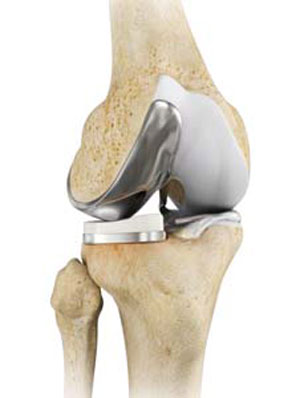
When knee arthritis is limited to one area of the joint, unicompartmental or partial knee replacement in Seattle, WA may provide an alternative to replacing the entire knee. Partial knee replacement removes and replaces only the damaged portion of the knee while preserving healthy bone, cartilage, and other structures when appropriate. Dr. Thomas Fraychineaud, MD, is a fellowship-trained orthopedic surgeon specializing in adult reconstruction and hip and knee replacement. He provides individualized evaluations to determine whether partial knee replacement or another treatment option is appropriate for your knee condition, activity level, and goals.
What is Unicompartmental Knee Replacement?
Unicompartmental knee replacement is a minimally invasive surgery in which only the damaged compartment of the knee is replaced with an implant. It is also called a partial knee replacement.
The knee can be divided into three compartments: patellofemoral, the compartment in front of the knee between the kneecap and thighbone, the medial compartment, on the inside portion of the knee, and lateral compartment which is the area on the outside portion of the knee joint.
What is Arthritis?
Arthritis is the inflammation of a joint that causes pain, swelling (inflammation) and stiffness.
Osteoarthritis is the most common form of knee arthritis, in which the joint cartilage gradually wears away. It most often affects older people. In a normal joint, articular cartilage allows for smooth movement within the joint, whereas in an arthritic knee the cartilage itself becomes thinner or completely absent. In addition, the bones become thicker around the edges of the joint and may form bony spurs. These factors can cause pain and restricted range of motion in the joint.
How is Arthritis Diagnosed?
Your doctor will diagnose osteoarthritis based on your medical history, physical examination, and X-rays. X-rays typically show a narrowing of joint space in the arthritic knee.
What are the Indications for Unicompartmental Knee Replacement?
Traditionally, total knee replacement was commonly indicated for severe osteoarthritis of the knee. In total knee replacement, all worn out or damaged surfaces of the knee joint are removed and replaced with new artificial parts. Partial knee replacement is a surgical option if your arthritis is confined to a single compartment of your knee.
Your doctor may also recommend surgery if non-surgical treatment options such as medications, injections, and physical therapy have failed to relieve the symptoms.
How is Unicompartmental Knee Replacement Surgery Performed?
During the surgery, a small incision is made over the knee to expose the knee joint. Your surgeon will remove only the damaged part of the meniscus and place the implant into the bone by slightly shaping the shinbone and the thighbone. The plastic component is placed into the newly prepared area and secured with bone cement. Now, the damaged region of the femur or thighbone is removed to accommodate the new metal component, which is fixed in place using bone cement. Once the femoral and tibial components are fixed in proper place the knee is taken through a range of movements. The muscles and tendons are then repaired and the incision is closed.
What Does Postoperative Care for Unicompartmental Knee Replacement Involve?
You may walk with the help of a walker or cane for the first 1-2 weeks after surgery. A physical therapist will introduce you to an exercise program to follow for 4 to 6 months to help maintain range of motion and restore your strength. You may perform exercises such as walking, swimming, and biking but high impact activities such as jogging should be avoided.
What are the Risks and Complications of Unicompartmental Knee Replacement?
The possible risks and complications associated with unicompartmental knee replacement include:
- Knee stiffness
- Infection
- Blood clots (Deep vein thrombosis)
- Nerve and blood vessel damage
- Ligament injuries
- Patella (kneecap) dislocation
- Wearing of the plastic liner
- Loosening of the implant
What are the Advantages of Unicompartmental Knee Replacement?
The advantages of unicompartmental knee replacement over total knee replacement include:
- Smaller incision
- Less blood loss
- Quick recovery
- Less postoperative pain
- Better overall range of motion
- Feels more like a natural knee
Why Choose Dr. Fraychineaud for Unicompartmental/Partial Knee Replacement in Seattle, WA?
Partial knee replacement requires careful evaluation to determine whether arthritis is confined to a single compartment and whether the remaining parts of the knee are healthy enough to support the procedure. Dr. Thomas Fraychineaud completed his orthopedic surgery residency at George Washington University and pursued fellowship training in adult reconstruction at the University of Minnesota. His specialized training focuses on hip and knee replacement and complex joint reconstruction.
Dr. Fraychineaud takes an individualized approach to knee replacement, considering the location and severity of arthritis, knee stability, overall joint health, activity level, and treatment goals when developing a surgical plan. His expertise in adult reconstruction and joint replacement provides patients in Seattle and surrounding communities with specialized care for conditions that may require partial or total knee replacement.
Patients choose Dr. Fraychineaud for:
- Fellowship training in Adult Reconstruction and Joint Replacement
- Specialized expertise in hip and knee replacement
- Experience evaluating patients for partial and total knee replacement
- Individualized treatment plans based on knee condition and lifestyle
- Expertise in primary and complex joint reconstruction
- Evidence-based orthopedic care informed by clinical research
- A comprehensive approach focused on improving mobility and knee function
Unicompartmental/Partial Knee Replacement FAQs
What is unicompartmental or partial knee replacement?
Unicompartmental knee replacement, also called partial knee replacement, is a procedure in which only the damaged portion of the knee joint is replaced with artificial components. The knee has three compartments: the medial compartment on the inner side, the lateral compartment on the outer side, and the patellofemoral compartment between the kneecap and thighbone. Partial replacement may be appropriate when arthritis is limited to a single compartment.
Who is a candidate for partial knee replacement?
Partial knee replacement may be considered for patients whose arthritis is primarily limited to one compartment of the knee and who have appropriate ligament function and overall joint health. A thorough evaluation, including a physical examination and imaging, is needed to determine whether partial knee replacement is appropriate. Not everyone with knee arthritis is a candidate for this procedure.
How is partial knee replacement different from total knee replacement?
Partial knee replacement replaces only the damaged compartment of the knee, while total knee replacement replaces the damaged surfaces of multiple areas of the joint. Because partial replacement preserves more of the patient's natural knee structures, it may offer certain benefits for appropriately selected patients. The best procedure depends on the location and severity of arthritis and the overall condition of the knee.
What is recovery like after partial knee replacement?
Recovery varies among patients. Many people are able to begin walking soon after surgery and may initially use a cane or walker for support. Physical therapy or a home exercise program may be recommended to restore strength, flexibility, balance, and range of motion. Your surgeon will provide individualized instructions regarding activity and rehabilitation.
What are the potential benefits of partial knee replacement?
For appropriately selected patients, potential benefits may include preserving more of the natural knee, a smaller surgical exposure, and potentially faster early recovery compared with total knee replacement. Some patients may also experience good range of motion and a knee that feels more natural. Individual results vary, and partial knee replacement is not automatically preferable to total knee replacement.
What are the risks of partial knee replacement?
Potential complications include infection, blood clots, stiffness, nerve or blood vessel injury, ligament injury, implant wear or loosening, and persistent or recurrent knee pain. Arthritis may also develop or progress in another compartment of the knee over time. Your orthopedic surgeon will discuss the potential risks and benefits based on your individual condition.
Explore Partial Knee Replacement Options in Seattle, WA
If knee arthritis is causing persistent pain and limiting your ability to walk, exercise, work, or enjoy everyday activities, a specialized orthopedic evaluation can help determine which treatment is right for you. Dr. Thomas Fraychineaud, MD, specializes in adult reconstruction and hip and knee replacement and can evaluate whether unicompartmental or partial knee replacement may be appropriate for your condition.
Serving patients in Seattle and surrounding communities, Dr. Fraychineaud provides individualized orthopedic care focused on restoring mobility and helping patients make informed treatment decisions.
Contact Dr. Thomas Fraychineaud in Seattle, WA, to schedule a consultation and learn whether partial knee replacement may be an appropriate option for your knee arthritis.