

Direct Anterior Hip Replacement in Seattle, WA
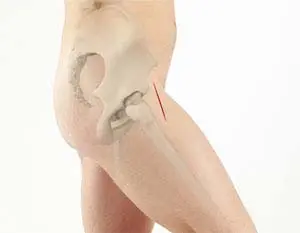
Hip arthritis can cause persistent pain, stiffness, and reduced mobility, making everyday activities increasingly difficult. Direct anterior hip replacement in Seattle, WA is a surgical approach to total hip replacement that accesses the hip joint through an incision at the front of the hip. Dr. Thomas Fraychineaud, MD, is a fellowship-trained orthopedic surgeon specializing in adult reconstruction and hip and knee replacement. He provides personalized evaluation and treatment planning for patients who may benefit from hip replacement, considering their anatomy, condition, activity level, and goals when determining the most appropriate surgical approach.
What is Direct Anterior Approach Hip Replacement Surgery?
Direct anterior hip replacement, also called direct anterior total hip arthroplasty, is a minimally invasive hip surgery to replace the hip joint without cutting through any muscles or tendons as against traditional hip replacement that involves cutting major muscles to access the hip joint.
What is the Procedure for Anterior Hip Replacement?
Anterior hip replacement surgery is performed under general anesthesia or regional anesthesia. You will lie down on your back, on a special operating table that enables your surgeon to perform the surgery from the front of the hip. Your surgeon may use fluoroscopic imaging during the surgery to ensure the accuracy of component positioning and to minimize leg length inequality.
Your surgeon will make an incision, about 3-4 inches long on the front of the hip. The muscles are pushed aside to gain access to the joint and perform the replacement. Next, the femur is separated from the acetabular socket. The acetabular surface is prepared using a special instrument called a reamer. The acetabular component is cemented or fixed with screws into the socket. Then a liner made up of plastic, metal, or ceramic is placed inside the acetabular component.
The femoral head that is worn out is cut off and the femur is prepared using special instruments so that the new metal component fits the bone properly. Then, the new femoral component is inserted into the femur either by a press fit or by using special bone cement. The femoral head component made of ceramic or metal is then placed on the femoral stem.
Once the artificial components are fixed in place, the instruments are withdrawn and incisions are closed with sutures and covered with a sterile dressing.
What are the Risks and Complications of Anterior Hip Replacement?
All surgeries carry an element of risk, whether it is related to the anesthesia or the procedure itself. Risks and complications with anterior hip replacement are rare, but can occur and may include:
- Infection at the incision site or joint space
- Fracture
- Nerve damage
- Hemarthrosis - excess bleeding into the joint after the surgery
- Deep vein thrombosis (blood clot)
- Leg length inequality
What Does Postoperative Care for Anterior Hip Replacement Involve?
Post surgery, your doctor will give you specific instructions to be followed at home for a faster recovery. These include:
- Take medications as prescribed to relieve pain and prevent infection.
- Participate in physical therapy to restore hip function and strength.
- Eat a healthy diet and do not smoke to facilitate healing and promote a faster recovery.
- Contact your doctor if you observe increasing swelling or redness in the operated area.
After traditional hip replacement surgery, you would be instructed to follow precautions to prevent your new hip from dislocating. These guidelines are very restrictive and include:
- No bending or flexing of the hip past 90 degrees.
- No crossing of legs.
- Use a pillow between the legs when sleeping.
- Use an elevated toilet seat.
As anterior hip replacement uses a muscle-sparing technique there is increased joint stability after surgery and in most cases, these precautions are not needed.
What are the Advantages of Anterior Hip Replacement?
The advantages of anterior hip replacement include:
- Smaller incisions
- Shorter operative time
- Minimal blood loss
- Short hospital stay
- Less postoperative pain
- Minimal soft-tissue trauma
- Less scarring
- Quicker recovery
- Early mobilization
- Less postoperative restrictions
- Quicker return to normal activities
- Lower risk of dislocation
Why Choose Dr. Fraychineaud for Direct Anterior Hip Replacement in Seattle, WA?
Choosing an orthopedic surgeon with specialized training in adult reconstruction is an important consideration when hip arthritis begins to interfere with your mobility and quality of life. Dr. Thomas Fraychineaud completed his orthopedic surgery residency at George Washington University and advanced fellowship training in adult reconstruction at the University of Minnesota. His specialized training includes hip and knee replacement and complex joint reconstruction.
Dr. Fraychineaud takes an individualized approach to hip replacement, evaluating each patient's condition and discussing appropriate surgical options based on their anatomy, symptoms, lifestyle, and treatment goals. His experience in adult reconstruction, along with expertise in primary and revision joint replacement, provides patients in Seattle and surrounding communities with specialized care for complex hip conditions.
Patients choose Dr. Fraychineaud for:
- Fellowship training in Adult Reconstruction and Joint Replacement
- Specialized expertise in hip replacement and adult reconstruction
- Experience with primary and complex joint replacement procedures
- Individualized evaluation and treatment planning
- Evidence-based orthopedic care informed by clinical research
- A comprehensive approach focused on restoring mobility and hip function
Direct Anterior Hip Replacement FAQs
What is direct anterior hip replacement?
Direct anterior hip replacement is a surgical approach to total hip replacement in which the surgeon accesses the hip joint through an incision at the front of the hip. The approach is designed to work between muscles and tissues to reach the joint while limiting disruption to surrounding soft tissues. Whether the direct anterior approach is appropriate depends on factors such as your anatomy, diagnosis, previous surgeries, and overall health.
What are the potential benefits of the direct anterior approach?
Potential benefits may include less disruption to certain surrounding soft tissues, reduced postoperative discomfort for some patients, and earlier mobility during recovery. Some patients may also experience fewer movement restrictions after surgery. However, results vary, and the direct anterior approach is not necessarily the best option for every patient.
How is direct anterior hip replacement performed?
During direct anterior hip replacement, the patient is positioned on their back and the surgeon makes an incision at the front of the hip. The surgeon accesses the hip joint, removes the damaged femoral head and prepares the hip socket and femur for the artificial components. The new acetabular and femoral components are then positioned and secured. The incision is closed after the implants are placed. Imaging may be used during surgery depending on the surgeon's technique and the patient's needs.
Is direct anterior hip replacement minimally invasive?
Direct anterior hip replacement is often described as a minimally invasive approach because the surgeon accesses the hip through an incision at the front of the joint and works between surrounding tissues. However, it remains a major joint replacement procedure. The size of the incision and the amount of tissue disruption can vary between patients and surgical techniques.
Are there fewer restrictions after anterior hip replacement?
Some patients may have fewer hip precautions after direct anterior replacement than patients undergoing certain other surgical approaches. However, postoperative instructions vary based on the surgical approach, implant stability, individual risk factors, and the surgeon's recommendations. Patients should follow their specific recovery instructions rather than assuming that standard hip precautions do not apply.
How long does recovery take after direct anterior hip replacement?
Recovery varies from patient to patient. Many patients begin walking soon after surgery and gradually increase their activity as healing progresses. Physical therapy or a prescribed home exercise program may be recommended to improve strength, flexibility, balance, and mobility. Your surgeon can provide individualized guidance on returning to work, driving, exercise, and other activities.
Explore Your Hip Replacement Options in Seattle, WA
If hip arthritis is causing ongoing pain, stiffness, or difficulty with walking and everyday activities, it may be time to discuss your treatment options. Dr. Thomas Fraychineaud, MD, specializes in adult reconstruction and hip and knee replacement and can evaluate your condition to determine whether total hip replacement may be appropriate.
Serving patients in Seattle and surrounding communities, Dr. Fraychineaud provides personalized orthopedic care and can discuss whether the direct anterior approach to hip replacement is suitable for your individual needs.
Contact Dr. Thomas Fraychineaud in Seattle, WA, to schedule a consultation and learn more about your hip replacement options.